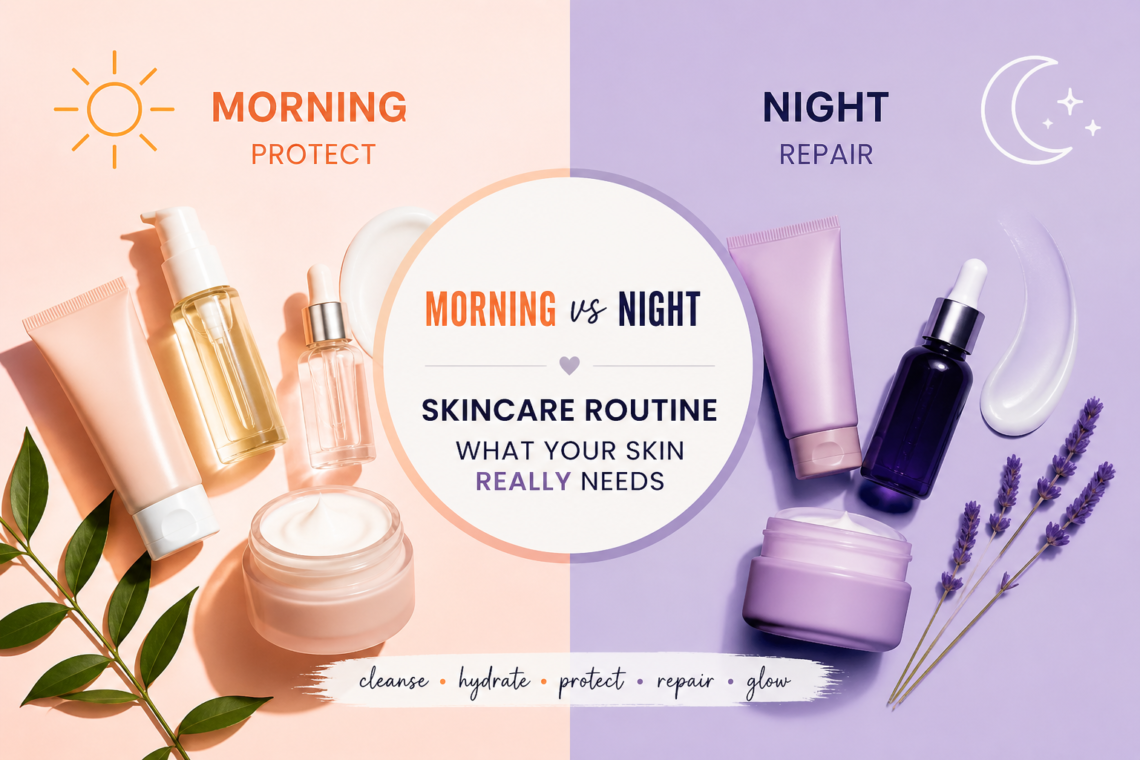
Your skin works differently throughout the day and night. That’s why a morning skincare routine and a night skincare routine should never be exactly the same.
During the day, your skin needs protection from environmental stressors like sunlight, pollution, and dryness. At night, your skin focuses on repair and renewal.
Understanding what your skin actually needs at each time of day can make a big difference in how healthy, balanced, and glowing it looks.
In this guide, I’m sharing the simple routine I follow, what each step does, and why a proper morning and night skincare routine matters more than most people realize.
Why Morning and Night Skincare Routines Are Different
Your skin follows a natural cycle.
During the day, your skin is exposed to:
- UV rays
- pollution
- dirt and bacteria
- oil buildup
- dehydration
So your morning routine should focus on protection and hydration.
At night, your skin shifts into recovery mode. This is when it works to:
- repair damage
- regenerate skin cells
- restore moisture
- rebuild collagen
That’s why your nighttime routine should focus on cleansing, treatment, and nourishment.
When you support your skin’s natural cycle with the right routine, you help maintain healthy skin for the long term.
Morning Skincare Routine: Protect and Prepare
A good morning skincare routine should be simple but effective. The goal is to prepare your skin for the day ahead.
Here’s the routine I personally follow.
Step 1: Gentle Cleanser
Even if your skin looks clean in the morning, it still produces oil overnight.
A gentle cleanser helps remove:
- excess oil
- sweat
- bacteria
- leftover skincare products
Look for a cleanser that supports the skin barrier and does not strip natural moisture.
Good cleansers usually contain ingredients like:
- glycerin
- ceramides
- aloe vera
Avoid harsh cleansers that leave your skin feeling tight or dry.
Healthy skin should feel clean but comfortable after cleansing.
Step 2: Hydrating Toner or Essence
A hydrating toner helps restore moisture immediately after cleansing.
This step prepares your skin to absorb the rest of your skincare products more effectively.
Hydrating toners often include ingredients like:
- hyaluronic acid
- panthenol
- green tea extract
- rice water
If your skin tends to feel dry or dull, a hydrating toner can make a noticeable difference in how smooth and fresh your skin feels throughout the day.
Step 3: Antioxidant Serum
Serums are where your skincare routine becomes more targeted.
In the morning, antioxidant serums help protect the skin from environmental damage.
Common antioxidant ingredients include:
- vitamin C
- niacinamide
- ferulic acid
Vitamin C is especially popular because it helps:
- brighten the skin
- reduce dullness
- support collagen production
- protect against free radicals
A lightweight serum applied after toner can significantly improve skin clarity and brightness over time.
Step 4: Moisturizer
Moisturizer helps lock in hydration and maintain the skin’s natural barrier.
Even oily skin needs moisturizer.
Skipping moisturizer can actually cause the skin to produce more oil to compensate for dryness.
Choose a moisturizer based on your skin type:
For dry skin
Look for richer creams with ingredients like:
- ceramides
- shea butter
- squalane
For oily or combination skin
Lightweight gel moisturizers often work better.
Ingredients like:
- hyaluronic acid
- glycerin
- aloe vera
provide hydration without heaviness.
Step 5: Sunscreen (The Most Important Step)
If there’s one skincare step you should never skip, it’s sunscreen.
Daily sunscreen protects the skin from:
- premature aging
- dark spots
- sun damage
- loss of collagen
Even short sun exposure can cause long-term skin damage.
Dermatologists consistently emphasize that sunscreen is one of the most effective anti-aging habits.
Look for:
- SPF 30 or higher
- broad-spectrum protection
- lightweight texture
Apply sunscreen as the final step of your morning skincare routine.
Night Skincare Routine: Repair and Restore
At night, your skin becomes more receptive to repair-focused ingredients that support cellular renewal and barrier recovery. Ingredients used in regenerative skincare formulas are becoming increasingly popular because they help improve resilience and overall skin health. If you’re curious about these new ingredients, this guide explaining PDRN skincare and its role in skin regeneration breaks down how these treatments support overnight repair.
Step 1: Remove Makeup and Sunscreen
If you wear makeup or sunscreen, removing it properly is essential.
Many people use double cleansing at night.
Double cleansing usually includes:
- an oil-based cleanser
- a water-based cleanser
Oil cleansers dissolve:
- makeup
- sunscreen
- excess sebum
The second cleanser removes remaining dirt and sweat.
This method leaves the skin thoroughly clean without excessive scrubbing.
Step 2: Gentle Cleanser
After removing makeup, a gentle cleanser ensures the skin is completely clean.
This step prevents clogged pores and helps reduce breakouts.
Clean skin also allows treatment products to absorb better.
Step 3: Treatment Serums
Nighttime is when treatment ingredients work best.
Your skin naturally repairs itself while you sleep, making nighttime the ideal moment for active ingredients.
Common nighttime ingredients include:
Retinol
Helps improve:
- fine lines
- skin texture
- uneven tone
Peptides
Support collagen production and skin elasticity.
Niacinamide
Helps balance oil production and reduce redness.
If your skin is sensitive, start slowly with active ingredients to avoid irritation.
Step 4: Moisturizer or Night Cream
Night creams are usually richer than daytime moisturizers.
They help support overnight skin repair and maintain hydration.
Ingredients commonly found in night creams include:
- ceramides
- peptides
- fatty acids
- squalane
These ingredients help strengthen the skin barrier while you sleep.
When you wake up, your skin often feels smoother and more hydrated.
Step 5: Optional Overnight Treatments
Some people add extra steps at night depending on their skin needs.
Examples include:
- overnight hydrating masks
- eye creams
- sleeping masks
These treatments provide additional nourishment and hydration.
However, they are optional.
A consistent basic routine is usually enough for most people.
The Key Differences Between Morning and Night Skincare
Here’s a simple way to understand the difference between the two routines.
| Morning Routine | Night Routine |
| Focus on protection | Focus on repair |
| Includes sunscreen | Includes treatment products |
| Lightweight hydration | Deeper nourishment |
| Prepares skin for the day | Supports overnight skin recovery |
Both routines work together to keep the skin balanced and healthy.
Common Skincare Mistakes to Avoid
Many people follow skincare routines but still struggle with skin issues because of a few common mistakes.
Using Too Many Products
More products do not always mean better results.
Overloading the skin can lead to irritation and breakouts.
A simple routine often works best.
Skipping Sunscreen
Sun damage is one of the biggest causes of premature aging.
Without sunscreen, even the best skincare routine cannot fully protect the skin.
Changing Products Too Frequently
Skincare requires patience.
Most products need several weeks before showing visible results.
Switching products too quickly can prevent you from seeing their benefits.
Building a Routine That Works for Your Skin
Everyone’s skin is different.
Your ideal routine depends on factors such as:
- skin type
- climate
- lifestyle
- sensitivity levels
The best skincare routine is the one that feels comfortable and sustainable for your daily life.
Start simple.
Pay attention to how your skin responds.
Adjust your routine gradually as you learn what works best for you.
A thoughtful morning skincare routine protects your skin from daily environmental stress, while a consistent night skincare routine allows your skin to repair and regenerate.
Together, these routines support healthier, stronger, and more radiant skin.
You don’t need complicated routines or dozens of products.
A few well-chosen steps, practiced consistently, can make a noticeable difference over time.
For me, skincare is more than just a beauty habit. It’s a daily moment of self-care a simple ritual that helps me start and end the day feeling refreshed and confident.
And that’s really what great skincare is about: taking care of your skin so you can feel comfortable and confident in it every day.
