For a long time, I thought I just had difficult skin. My forehead and nose would get shiny within an hour of washing my face but my cheeks would still feel tight and uncomfortable by evening. I tried every cleanser I could find at the drugstore. Some made the oiliness worse. Some made my cheeks peel. Nothing worked for my whole face at the same time.
It wasn’t until I started paying closer attention that I realised I wasn’t dealing with “problem skin” at all. I had sensitive combination skin and once I understood what that actually meant, everything about my routine changed.
The turning point for me was stopping trying to fix both problems separately. Once I started treating my skin as one skin type with specific needs instead of fighting the oily parts and the dry parts independently everything became much simpler.
If this sounds familiar, this guide is for you. We’re going to cover exactly what sensitive combination skin is, how to identify it, what causes it, and how to build a simple, affordable skincare routine that genuinely works for it without spending a fortune or using fifteen products a day.
What Is Sensitive Combination Skin?
Sensitive combination skin is a skin type that combines the characteristics of combination skin and sensitive skin at the same time and yes, you can absolutely have both.
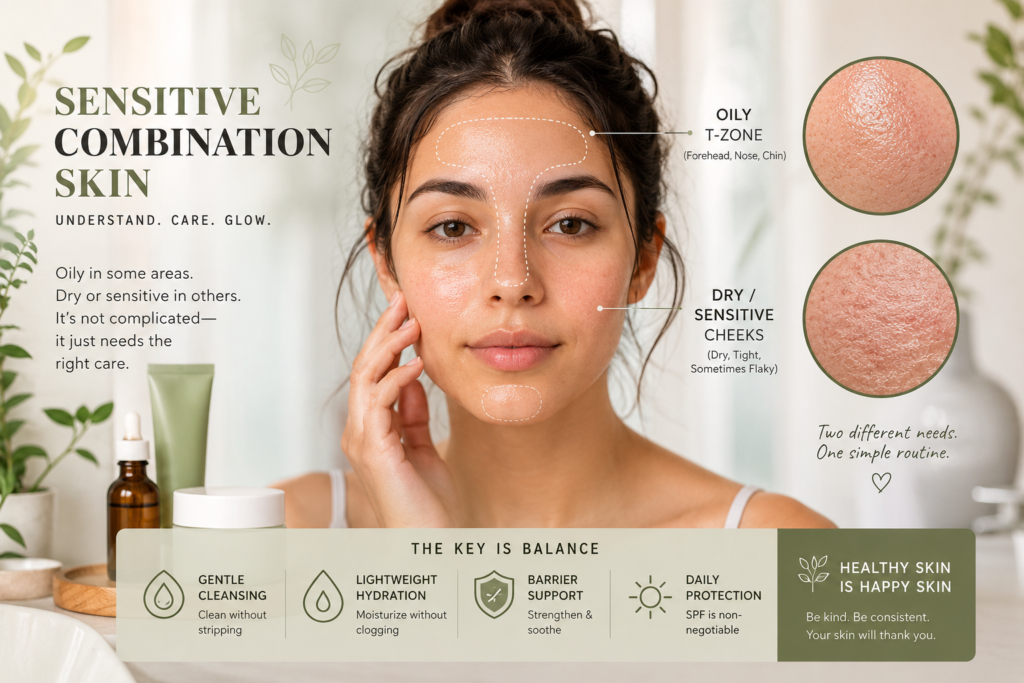
Here’s the simplest way I can explain it: combination skin means different parts of your face behave completely differently. Your T-zone acts like it belongs to an oily skin type. Your cheeks act like they belong to a dry skin type. Both are on the same face. Both need different things.
Sensitive skin means your skin reacts easily. Redness, stinging, irritation, or breakouts triggered by products, weather changes, or stress are all hallmarks of sensitive skin. The skin barrier the protective outer layer that keeps moisture in and irritants out is often more fragile in people with sensitive skin.
When you have both, you’re managing oil imbalance and reactivity simultaneously. Products designed for oily skin are often too stripping. Products designed for dry or sensitive skin can feel too heavy on your T-zone. It’s a narrow window to work within but it’s absolutely manageable once you know what your skin actually needs.
| Quick definition: Combination = where the oil is. Sensitive = how reactive your skin is. Two different characteristics, one face. |
Can You Have Both Combination and Sensitive Skin?
Yes and it’s more common than you might think. Combination and sensitive are not the same characteristic, so they don’t cancel each other out. Combination skin describes your skin’s oil distribution pattern. Sensitive skin describes how reactive your skin barrier is. They operate independently, which means they can easily coexist.
Think of it like this: having a fast metabolism doesn’t mean you can’t also have allergies. Two different systems, both present in the same person.
Research consistently shows that sensitive skin affects a large portion of the global population estimates range from 50 to 70 percent depending on the study while combination skin is regularly cited as one of the most common skin types worldwide. So the overlap isn’t surprising at all.
Signs You Have Sensitive Combination Skin
Here are the most telling signs to look for:
Your T-zone (forehead, nose, chin) gets oily during the day, but your cheeks feel dry, tight, or occasionally flaky
New products frequently cause redness, stinging, or breakouts even ones labelled ‘gentle’ or ‘for sensitive skin’
Your skin behaves differently in different seasons more reactive and dry in winter, oilier and more congested in summer
You break out mainly along the T-zone but rarely on your cheeks
Fragranced products, alcohol-based toners, or strong exfoliants cause an immediate reaction
Your complexion looks uneven or dull, but also develops shine in certain areas by midday
You’ve never found a single product that works well for your whole face
You’ve Googled ‘why does my skin feel dry and oily at the same time’ at least once I know I have
If most of these resonate, sensitive combination skin is almost certainly what you’re working with.
What Causes Sensitive Combination Skin?
Genetics
Your skin type is largely inherited and honestly, once I looked at my mum’s skin, it all made sense. If your parents have combination or reactive skin, there’s a very good chance you will too. Genetics influence how much sebum your oil glands produce and how resilient your skin barrier is from the start.
A Weakened Skin Barrier
The skin barrier is made up of lipids, proteins, and natural moisturising factors that lock in moisture and block out irritants. When this barrier is compromised through over-exfoliation, harsh cleansers, or environmental exposure, skin becomes increasingly reactive. This is often the underlying reason why the sensitive component develops or worsens over time.
Climate and Environment
Heat and humidity increase oil production. Cold, dry air strips moisture. Air conditioning and central heating both have similar drying effects. If your environment shifts seasonally or even daily your skin often shifts with it.
Using the Wrong Products
This one took me years to figure out. I spent a long time using a strong foaming cleanser because I thought it would control the oiliness. It did the opposite — it stripped my skin barrier and made everything more reactive. Many people unknowingly increase their skin’s sensitivity by using products that are too harsh: strong sulfate cleansers, high-alcohol toners, or physical scrubs used too frequently. Over time, these strip the barrier and skin becomes more reactive as a result. The good news: the damage is reversible with the right routine.
Hormonal Fluctuations
Hormones directly influence sebum production. Changes during the menstrual cycle, periods of high stress, or hormonal shifts can make combination skin more pronounced and temporarily increase reactivity.
The Complete Skincare Routine for Sensitive Combination Skin
The goal here is simple: balance oil in the T-zone, keep moisture in drier areas, and protect the skin barrier so reactivity decreases over time. Every product recommendation below is affordable and widely available at most drugstores.
Morning Routine
Step 1: Gentle Cleanser
You want something that removes overnight buildup without stripping the skin. Look for a sulfate-free, fragrance-free gel or cream cleanser with a pH close to 5.5. Avoid anything that makes your skin feel squeaky clean — that feeling is actually your barrier being disrupted.
| Recommended: CeraVe Hydrating Facial CleanserGentle enough for sensitive skin, contains ceramides and hyaluronic acid to cleanse without stripping. Works well for both oily and dry zones. This is the cleanser I switched to and it made an immediate difference to my skin’s reactivity. |
Alternative: La Roche-Posay Toleriane Hydrating Gentle Cleanser slightly richer texture, excellent for very reactive skin.
Step 2: Hydrating Toner (Optional)
Toner is optional, but if you use one, choose an alcohol-free, hydrating formula. This step adds a layer of hydration before your moisturiser and can help soothe reactivity. Skip anything with witch hazel in a high concentration or any form of alcohol listed in the first five ingredients.
| Recommended: Garnier SkinActive Micellar Water patted on as tonerBudget-friendly, fragrance-free, and gentle enough for daily use. Just pat it on with clean hands no cotton pad needed. |
Step 3: Lightweight Moisturiser
I know this sounds counterintuitive I thought the same thing for years. But do not skip moisturiser on your oily zones. The month I finally committed to moisturising my T-zone every single day was the month my midday shine started to calm down. Your skin stops overproducing oil when it knows it’s getting consistent hydration.
| Recommended: Neutrogena Hydro Boost Water GelHyaluronic acid-based, oil-free, and non-comedogenic. Absorbs quickly, feels weightless on the T-zone, and provides enough hydration for drier cheek areas. One of the best lightweight moisturisers I’ve tried at this price point. |
Alternative: CeraVe PM Facial Moisturising Lotion slightly richer but still lightweight, with ceramides and niacinamide.
Step 4: Mineral Sunscreen (Non-Negotiable)
SPF is the most important step in your morning routine, full stop. UV exposure weakens the skin barrier, worsens sensitivity, and accelerates oil production. For sensitive combination skin, mineral sunscreens (zinc oxide or titanium dioxide) tend to be better tolerated than chemical filters.
| Recommended: La Roche-Posay Anthelios Mineral Tinted SPF 50Broad spectrum, mineral formula, lightweight finish. The tint helps neutralise redness without looking heavy. One of the best-tolerated SPFs for reactive skin — and it doesn’t pill under makeup. |
Budget alternative: Neutrogena Sensitive Skin Face Mineral Sunscreen SPF 50.
| Reminder: Apply SPF as the absolute last step in your morning routine, after moisturiser has fully absorbed. |
Evening Routine
Step 1: Double Cleanse
If you wear SPF or makeup during the day which you should start with a micellar water or gentle cleansing oil to break it down, then follow with your regular cleanser. Skipping this step means SPF residue sits on your skin overnight and contributes to congestion and irritation over time.
| Recommended: Garnier SkinActive Micellar Cleansing Water (first cleanse) + CeraVe Hydrating Facial Cleanser (second cleanse)This combination fully removes SPF and daily buildup without any harsh rubbing or stripping. Both are available at most pharmacies and supermarkets. |
Step 2: Treatment Serum 2 to 3 Nights Per Week Only
If you want to address texture, uneven tone, or pore appearance, this is where you introduce a gentle active. For sensitive combination skin, niacinamide is the most reliable starting point it regulates oil, strengthens the barrier, and reduces redness, all without the irritation risk of acids or retinol.
| Recommended: The Ordinary Niacinamide 10% + Zinc 1%One of the most affordable and well-researched options available. The zinc helps with excess oil while niacinamide works on barrier repair and redness. Use 2 to 3 nights per week to start I noticed a visible difference in shine control within about three weeks. |
Once your skin has adjusted usually after 4 to 6 weeks you can consider introducing a gentle PHA exfoliant once a week for texture. PHAs are the most sensitive skin-friendly exfoliating acid available.
Step 3: Barrier Moisturiser
At night, you can use a slightly richer moisturiser than your daytime formula. Focus on barrier-repairing ingredients: ceramides, panthenol, squalane, and shea butter. Apply a normal amount all over, then add a slightly heavier layer on the cheeks if they tend to be drier.
| Recommended: CeraVe Moisturising Cream (heavier application on cheeks) or CeraVe PM Facial Moisturising Lotion (lighter, all-over)Both contain ceramides and hyaluronic acid. The cream is better for very dry cheeks; the lotion works well as an all-over option that won’t feel heavy on the T-zone. |
Best Ingredients for Sensitive Combination Skin
When you’re reading product labels, these are the ingredients you want to see:
Niacinamide: controls oil, reduces redness, strengthens the skin barrier
Ceramides: rebuild and repair the skin barrier; essential for sensitive skin
Hyaluronic acid: lightweight hydration that works equally well on oily and dry zones
Centella asiatica (Cica): calms inflammation and supports barrier recovery
Glycerin: a gentle humectant that pulls moisture into the skin
Panthenol (Vitamin B5): soothes irritation and improves skin softness over time
Zinc oxide: soothes redness and works as a gentle mineral sunscreen ingredient
Ingredients to Avoid
These are the ingredients most likely to cause problems for sensitive combination skin even in products marketed as gentle:
Fragrance (listed as ‘parfum’): the single most common trigger for sensitive skin reactions
Denatured alcohol or SD alcohol: strips the skin barrier and worsens reactivity over time
Sodium lauryl sulfate (SLS): too harsh in cleansers; disrupts the skin barrier
Essential oils (tea tree, lavender, peppermint, rose): common sensitisers despite their natural origin
High-concentration acids above 10% AHA or 2% BHA: too aggressive for reactive skin without a very slow build-up
Synthetic dyes and colorants: no skincare benefit, higher irritation potential
Common Mistakes to Avoid
Over-Exfoliating
More exfoliation does not mean clearer skin. For sensitive combination skin, exfoliating more than two to three times per week almost always backfires it strips the barrier, increases redness, and often triggers more oil production as the skin scrambles to compensate. If your skin feels raw or looks more reactive after exfoliating, you’re doing it too often.
Using Different Products for Each Zone
Applying a drying treatment all over the T-zone and a heavy cream all over the cheeks tends to create more problems than it solves. A well-formulated lightweight product that suits your whole face is almost always a better approach than aggressive zone-targeting.
Skipping Moisturiser on Oily Areas
I did this for two years. Every morning I would apply moisturiser to my cheeks and completely skip my T-zone because it already looked oily. My skin got oilier every month. The moment I started applying a light moisturiser all over including the T-zone the excess oil started to balance out within about three weeks. Don’t make the same mistake I did.
Introducing Too Many Products at Once
Sensitive skin needs slow introductions. When you add several new products at the same time, you lose the ability to identify what’s causing a reaction if one occurs. One new product at a time, two to three weeks between introductions, and you’ll always know exactly what your skin is responding to.
Frequently Asked Questions
Is combination skin the same as sensitive skin?
No. These are two different skin characteristics. Combination skin describes oil distribution across the face. Sensitive skin describes how reactive your skin barrier is. You can have one without the other, or both together which is what sensitive combination skin is.
What skin type is sensitive combination skin?
It’s a recognised skin type that combines the oil-distribution pattern of combination skin with the reactivity and low tolerance of sensitive skin. It’s more common than most people realise, and it responds well to a simplified, barrier-focused routine.
Can sensitive combination skin use retinol?
Yes, but carefully. Start with a very low concentration (0.025 percent), use it no more than once a week at night, and always follow with a rich moisturiser. If redness, peeling, or stinging occurs, reduce frequency further or try bakuchiol as a gentler alternative before moving to retinol.
How do I know if I have sensitive combination skin?
The key indicators are: oiliness in the T-zone alongside dry or tight cheeks, skin that reacts easily to new products, and the persistent feeling that no single product works well for your whole face. If that matches your experience, this is almost certainly your skin type.
Should I use different moisturisers for different parts of my face?
Generally, no. A well-formulated lightweight gel moisturiser works for both zones. If your cheeks are significantly drier, you can apply a slightly heavier cream to the cheeks only in the evenings but for most people, one good lightweight moisturiser applied all over is enough.
Final Thoughts
Having sensitive combination skin used to feel like a constant guessing game to me. But the more I understood what my skin actually needed balanced hydration, a protected barrier, and fewer harsh ingredients the more predictable it became.
You don’t need a complicated routine or expensive products. The basics, done consistently, work. A gentle cleanser, a lightweight moisturiser, and an SPF will do more for sensitive combination skin than a cabinet full of actives ever will.
Start simple. Introduce products slowly. Give your skin four to six weeks to show real change before adjusting anything. And when in doubt, less is almost always more.
If you have questions about specific products, your skin type, or anything in this guide leave a comment below. I read and reply to every single one. And if you found this helpful, share it with someone who’s been struggling with the same thing. Sensitive combination skin is more common than people realise, and most of us figured it out alone. It doesn’t have to be that way.

Great content! Keep up the good work!